
We should all educate ourselves on what it's like to live with hyperinflation, because Bishop Koyle said we would experience it prior to the dollar crash and vindication of the Relief Mine.
"He was shown that our entire wage and price structure had risen higher and higher so that it was like it was up on high stilts, and then suddenly it was as if someone over-night had kicked the stilts out from under it, and the whole thing came down with a crash to about 20 cents on the dollar. A working man who had been getting $20 or $30 a day would then be lucky to find work at $5 or $6 a day, but mainly there was no work to be found. His property would only be worth 20% of its former value, but his mortgage and other fixed debts would remain the same." (The Dream Mine Story by Norman Pierce p. 54)
Most people are aware that Weimar Germany experienced severe hyperinflation in the 1920s. You’ve likely seen the famous black-and-white photos of people pushing wheelbarrows full of cash just to buy basic goods like bread. By late 1923, the situation had become so extreme that even hard assets reflected the currency collapse—as an ounce of gold was worth roughly 87 trillion German marks!
Today, we’ll look at a modern version of the same pattern, but this time in Venezuela, where a similar breakdown of currency stability unfolded under very different circumstances. Because if you believe in Bishop Koyle's prophecies, then you know hyperinflation is coming before the dollar crash. This post is about being prepared.
Venezuela experienced one of the most severe cases of hyperinflation in modern history, beginning around 2016 and continuing for several years. At its peak, annual inflation reached thousands to millions of percent depending on the measure used. In practical terms, this meant prices were rising so quickly that money lost value almost immediately after it was earned.
During the worst periods, when their hyperinflation reached nearly 1,000,000%, prices could double in as little as two weeks or even less. This created a situation where everyday goods had to be constantly repriced just to keep up with the collapsing value of the currency. Businesses often updated prices frequently—sometimes weekly or even more often—because yesterday’s prices could already be outdated. Strangely enough, Walmart has just replaced all of their printed price tags with new ones that are digital and can be updated in seconds. See their short video about this. Could it be in preparation for constantly changing prices due to hyperinflation?
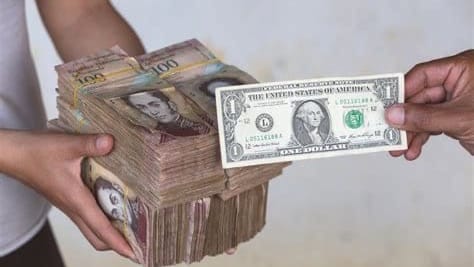
Basic staples in Venezuela like bread, rice, and cooking oil were especially affected. A loaf of bread that might have cost just a few bolivars early in the crisis rose to around 15,000–20,000 bolivars at the height of inflation. Over time, items that once cost tens or hundreds of bolivars surged into the thousands, then continued climbing into the hundreds of thousands and even millions as inflation accelerated.
As inflation worsened, people’s behavior changed in response. Many rushed to spend money as soon as they received it, since holding cash even for a short time meant losing purchasing power. Savings became unreliable, and long-term planning was extremely difficult because prices were unstable from week to week.
Eventually, many Venezuelans began relying on U.S. dollars, bartering, or informal exchange systems to buy essentials like food and medicine. The local currency still existed, but in many cases it no longer functioned effectively as a stable store of value or a reliable way to price everyday goods.
The United States May Be Next
You might already be aware of Brandon Biggs, and the gift of dreams that he claims. Granted, he is not infallible, and is not the same calibre of visionary as Bishop Koyle, however, the Lord still may have used him to warn people of future events. Discern for yourself.
Apparently the Lord showed him the first assassination attempt on President Trump, and how it would affect his right ear, months before that very thing happened. Also, the Lord showed him the devaluation of the U.S. dollar, the transition to a new digital money system, and the bankruptcy of all banks. Strange, that's what Jospeh Smith said:
"The time will come when the banks in every nation will fail and only two places will be safe where people can deposit their gold and treasures. These places will be the White Horse and England's vaults." (White Horse Prophecy)
Brandon describes the first drop in the value of the dollar as an overnight 50% devaluation. In practical terms, this would mean that if you had $1,000 in your checking account one day, its purchasing power could be reduced to $500 the next, as the currency loses value relative to goods and services. In an official devaluation scenario, your account balance would still read $1,000, but its real-world buying power—especially for imports and everyday goods tied to global prices—would be significantly reduced. Take a look at his short video.
(4 minutes)
How a Dollar Devaluation Hits Home
You may be wondering how an overnight devaluation of the dollar will affect the average American. Well, here are some examples:
- Housing – Sarah the Renter
Sarah pays $2,000/month for her apartment in Denver. The next morning, she wakes up to news of the 50% devaluation. Her landlord calls and says new tenants are now being charged $4,000/month. Sarah’s current lease is fixed for the next year, so she’s temporarily safe—but her paycheck hasn’t doubled.
Friends looking to move find they can’t afford apartments anymore, and tension spikes in her building.
Lesson: Fixed leases offer short-term protection, but housing becomes more expensive quickly for everyone else. - Gas – Mike the Commuter
Mike drives 30 miles each way to work. Gas was $4/gallon. By noon, he fills up his tank for the week—cost: $8/gallon. Suddenly, commuting and deliveries become painfully expensive. Mike starts carpooling and thinking about moving closer to work, but rental prices have already skyrocketed.
Lesson: Transportation costs soar almost instantly after a devaluation. - Groceries – Jessica the Mom
Jessica goes grocery shopping for her family. Eggs were $3, milk $4, bread $3.
Today, she notices eggs are $6, milk $8, bread $6. She swaps fresh produce for cheaper alternatives, but her weekly bill has doubled. Snacks and imported electronics for her kids are now out of reach.
Lesson: Everyday essentials double in price; middle-class families feel it immediately. - Loans – Jason the Homeowner
Jason has a fixed-rate mortgage at $1,500/month. Overnight, his payments are still $1,500, but the dollars are now worth half as much. Of course, if he had a variable interest rate, then his payment would rise. Jason breathes a sigh of relief—he’s winning while renters and savers are struggling.
Lesson: Fixed debts become easier to manage; borrowers gain at the expense of lenders. - Savings – Linda the Retiree
Linda has $50,000 in her savings account. The next morning, her bank balance hasn’t changed—still $50,000—but her dollars now buy half as much. She can only afford half her usual groceries and must cut back on medications and utilities.
Lesson: Cash savings are immediately devalued; retirees and savers suffer the most. - Crypto – Alex the Early Adopter
Alex had $5,000 in Bitcoin and other cryptos before the devaluation. As the dollar falls, his holdings double in USD terms, preserving his purchasing power. While everyone else panics over rent and groceries, Alex feels a strange sense of amazement.
Lesson: Pre-existing crypto or hard assets can protect wealth; dollar-pegged assets do not. Keep in mind that crypto is volatile and can go down. - New Currency Possibility – The Paper Reset
The government announces a “new note” worth half a greenback to reset the system. People line up to exchange old cash, but in reality, nothing has changed in real purchasing power—it’s just a formalization of the loss.
Lesson: Issuing a new note doesn’t undo the pain; it only labels it officially.
Remember, Bishop Koyle told believers that owning 100 shares would be sufficient to care for any man's family. But, if a man had more than 100, he would be in a better position to assist his fellow men during the times of financial trouble and famine.
The Devaluation Leads to Civil War
According to the prophet Joseph Smith, who will return in the future, the depreciation of the currency is what starts the second civil war. The following is a letter from Nephi Packard to A. Milton Musser on July 24, 1896:
"My brother, Noah Packard, says that he heard the Prophet Joseph say that the next great (U.S. civil) war after the war of the rebellion (the Civil War of the 1860's between the North and the South) would commence in a little town now called Chicago, but at that time it would have grown to be a very large city. And another brother told me that the Prophet said that the cause of the next great trouble of the United States would be the depreciation of the currency of the United States. I believe I have given you all the facts in as short and concise manner as possible."
It seems that before the return of Alma the Younger, as seen in Arnold Shreeve's fully awake vision of the mine starting up, conditions in the economy will continue to decline. The coming hyper-inflationary period, along with civil war, may be needed to humble our nation before the Lord allows the Relief Mine to begin providing relief. After all, Bishop Koyle once prophesied:
"The rich will grow richer and the poor poorer, until many will be blue in the face with hunger when the mine comes in." (John Jordan's List #62)
The purpose of this post is to warn and prepare people for the turbulent financial times that are coming, but it's not a message of fear. The Lord has spoken about the end times and said:
"If ye are prepared ye shall not fear." (D&C 38:30)
Conclusion
So how do we prepare so we’re not overcome by fear? Here are some suggestions:
- Do whatever you can to get out of debt ASAP!
- Buy gold and silver coins. This includes junk silver, which are dimes, quarters, and half dollars minted in 1964 or earlier that contain real silver. Obviously the whole point of the Relief Mine is to mint gold and silver coins, but until that day arrives, precious metals will help maintain your purchasing power. If you are looking for a place to buy, then I recommend fellow believer, Abe Day, who runs the OZ Bullion in Alpine, Utah.
- Help your friends and family get prepared by sharing this post.
- Read the post, Crypto Explosion Before Relief Mine Vindication, and prayerfully consider getting into crypto as a hedge against hyperinflation. I’m not a financial advisor—do your own research before making any decisions.
- Look over the various preparedness resources listed on the Links page.
- Search on YouTube for "hyperinflation dreams" to see what other people are sharing.
- Switch your variable-rate mortgage to a fixed rate to lock in your monthly payment and protect yourself against rising interest rates. As Bishop Koyle prophesied, interest rates will rise very high:
"Banks at this time would be full of money, but would be reluctant and afraid to lend a dollar to anyone since their credit would be no good anymore, for most of them could not pay it back. Instead there were numerous foreclosures on homes and farms and business, while interest rates soared to 10% and 12%. The bank established by the Relief Mine would salvage as many of these mortgages as they could and charge only 3% and 4% interest. It would vex the other banks, but they could do nothing about it because this bank had so much gold back of it."
And..
"The United States will experience increasing interest rates which will finally reach 20% to 24% after a period of 10% to 14%." (John Jordan's List # 38)
Questions to Ponder
- Do you own at least 100 Relief Mine shares? This is all Bishop Koyle said a man would need to take care of his family during these times.
- If your cost of living doubled overnight, what would you cut first—and what would you refuse to lose?
- How diversified are your savings between cash, assets, and crypto or other alternatives that would still hold value even if the U.S. dollar lost significant purchasing power?
- Do you have a clear exit strategy for converting crypto into necessities like housing, food, or fuel?
Leave your comments below.